
When you feel something’s off in your body, especially in the pelvic area, it’s easy to brush it off as stress, PMS, or just bad luck. But some symptoms aren’t normal—and they might point to something more serious, like a gynekologický nádor, nádorové onemocnění ženských pohlavních orgánů, které může postihnout vaječníky, dělohu nebo děložní čípek. Also known as těžká gynekologická choroba, it doesn’t always scream for attention, but it often whispers—and those whispers can be life-saving if you listen. Many women wait too long because they think, "It’s probably nothing." But with cancers like rakovina vaječníků, nádor, který často nevyvolá žádné příznaky až do pozdního stádia or rakovina děložního čípku, nádor, který se většinou vyvine pomalu a je včas detekovatelný screeningem, early detection changes everything.
There’s no single symptom that says "cancer," but certain patterns should raise red flags. Unexplained bloating that won’t go away, persistent pain in your lower belly or pelvis, feeling full too fast when eating, or unusual vaginal bleeding—especially after menopause—are not normal. If you’ve had a change in your discharge—thicker, foul-smelling, bloody, or greenish—that doesn’t clear up after treatment for a yeast infection, it’s not just a "bad cycle." And if you’re having pain during sex or when you go to the bathroom, don’t assume it’s just irritation. These are not just "women’s problems"—they’re warning signs that need answers.
What makes these cancers so dangerous is how quiet they are. A cyst on the ovary? Often harmless. But if it grows, twists, or changes texture, it can become something else. A persistent itching or burning? Could be a yeast infection—or something more. The key isn’t to panic, but to pay attention. Track your symptoms: when did they start? Do they get worse? Do they come back after treatment? Write it down. Bring it to your doctor. Don’t let fear silence you. The most common mistake women make isn’t ignoring symptoms—it’s assuming they’ll go away on their own. They won’t. And by the time they’re unbearable, it might be too late for simple solutions.
What you’ll find in the articles below aren’t scare tactics. They’re real stories, real signs, and real advice from women who’ve been there—and from doctors who’ve seen too many cases that could’ve been caught earlier. You’ll learn how to tell the difference between a common infection and something more serious, what tests actually matter, and when to push for more than a quick prescription. This isn’t about fear. It’s about knowing your body well enough to protect it.
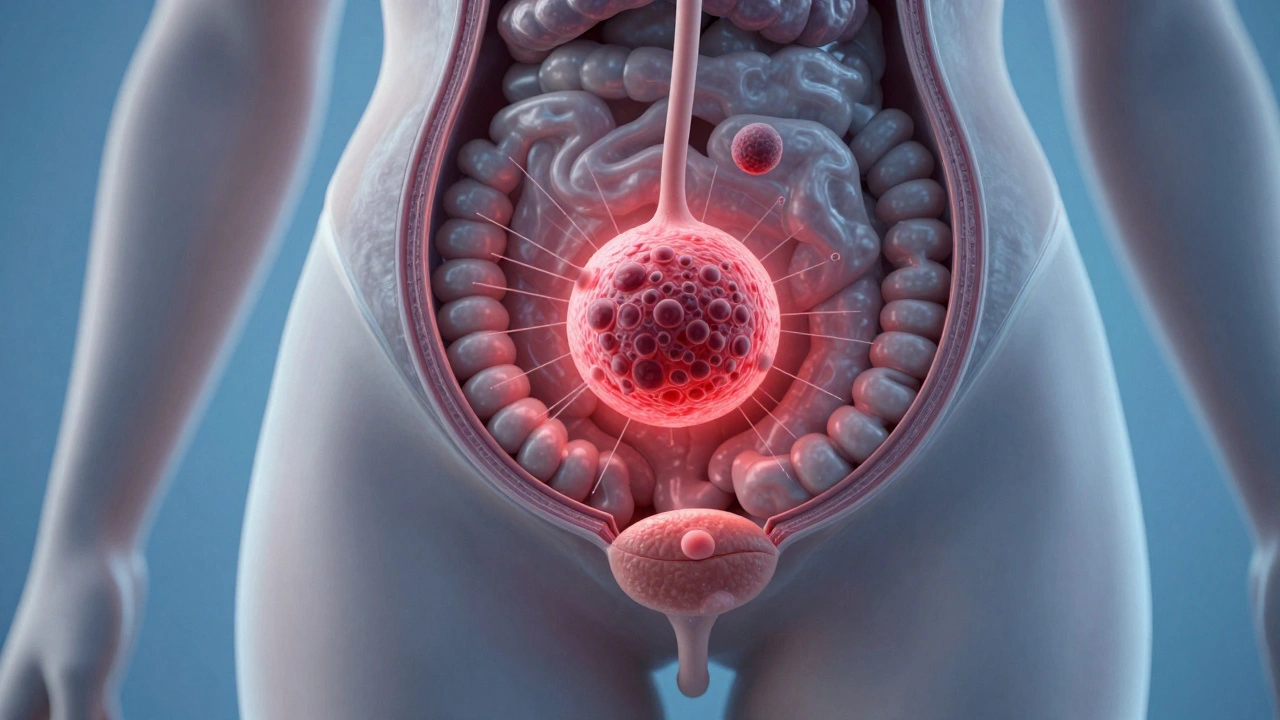
Nádor na vaječníkách může růst velmi rychle - někdy o 1-2 cm za měsíc. Příznaky jsou tiché, ale když se objeví více z nich najednou, je třeba okamžitě vyšetřit. Zjistěte, co dělat, když se cítíte špatně.
pro 5 2025
© 2026. Všechna práva vyhrazena.
Menu